Moving From California to Idaho: A Practical Guide to Planning Your Move
By Chuck and Renee Lamb
Moving from California to Idaho involves more than changing your address. It means choosing a new daily routine, understanding a different housing market, and deciding what you want your next chapter to look like.
We’re Chuck and Renee Lamb. We lived in Southern California and later in Danville, California, before making our own move to Idaho. Between us, we bring more than five decades of real estate experience—as well as an understanding of the personal decisions that come with relocating.
If you’re considering a similar move, start by looking beyond home prices and photographs. Think about how you want to live, what your move will cost, and what you need to learn before committing.

1. Decide What You Want From Your Move
Before opening a home-search app, ask yourself what you hope will be different.
Perhaps you want a smaller home, more outdoor space, proximity to family, or a different pace of life. You might be planning retirement, working remotely, or looking for a property that better fits your next stage.
Make three lists:
- Must-haves: The features, services, and access you need.
- Preferences: Things you would enjoy but could compromise on.
- Deal-breakers: Conditions that would make a property or location unsuitable.
Think beyond bedrooms and bathrooms. Include access to healthcare, transportation, shopping, activities, reliable internet, and the people who matter to you.
Our suggestion: Describe an ordinary weekday in your ideal new life. Where do you go? How much do you drive? What do you want nearby? Use those answers to guide your search.
2. Compare Locations Through Everyday Life
Choose an area by testing how it would work for you—not simply by how it looks during a short visit.
For each location you are seriously considering:
- Drive the routes you expect to use regularly.
- Visit grocery stores and other everyday services.
- Identify medical providers and confirm availability.
- Investigate internet service at potential home addresses.
- Explore activities that match your actual interests.
- Consider how often you will travel back to California.
If you will commute, test the trip during the hours you would normally travel. If you are retired, consider the appointments, social activities, and services that will shape your week.
Our suggestion: Spend part of your visit doing ordinary errands. A practical visit can reveal more than a sightseeing itinerary.

3. Build a Budget Around Total Ownership Costs
Do not assume a move will be less expensive simply because a particular home has a lower asking price.
Compare your actual current expenses with estimates for a specific property.
| Expense | What to investigate |
|---|---|
| Mortgage | Loan amount, interest rate, and complete monthly payment |
| Property taxes | Property-specific estimates and applicable exemptions |
| Insurance | A quote for the exact address and coverage you need |
| HOA | Dues, assessments, rules, and financial documents |
| Utilities | Available usage history and provider estimates |
| Maintenance | Property condition, landscaping, and anticipated repairs |
| Transportation | Daily driving and trips back to California |
| Moving | Movers, packing, storage, lodging, and overlapping housing |
Build a separate reserve for unexpected expenses during the transition.
Our suggestion: Compare the homes and lifestyles you would actually choose—not statewide averages or someone else’s moving experience.
4. Review Taxes Before You Set Your Timeline
Taxes are an important part of relocation planning, but the outcome depends on your finances and circumstances.
Idaho has a state income tax. Residents generally pay Idaho tax on income from all sources, while different rules apply to part-year residents. Social Security benefits are not taxed by Idaho, but pension and other retirement income may be taxable; limited deductions apply to certain qualifying pensions.[tax.idaho][tax.idaho]
Moving out of California also does not automatically eliminate every California tax obligation. California-source income, including rental income and gains from California real estate, can remain relevant after you move.[ftb.ca]
If you are selling your California primary residence, a gain exclusion may apply when the requirements are met. Your ownership history, occupancy, timing, and other circumstances matter.[ftb.ca]
Before choosing your moving and closing dates, ask a qualified tax professional:
- Will we need part-year returns in both states?
- What happens if we retain a California rental property?
- How might the timing of our home sale affect us?
- What records should we keep to document our move?
- How will our retirement income, investments, or employment income be treated?
Our suggestion: Get individualized advice before making major commitments, not after the transactions are complete.
5. Ask About Idaho’s Homeowner’s Exemption
If you purchase and occupy an Idaho home as your primary residence, you may qualify for a homeowner’s exemption.
The exemption reduces qualifying taxable property value; it does not reduce your tax bill dollar for dollar. Idaho’s guidance describes an exemption of 50% of the qualifying home and up to one acre of land, capped at $125,000 of exempt value. Applications are handled through the county assessor.[tax.idaho][tax.idaho]
Our suggestion: Contact the assessor for the county where you intend to buy. Confirm eligibility, application requirements, and a property-specific tax estimate rather than relying only on the seller’s bill.
6. Research the Climate Where You Intend to Live
Make weather research specific to your destination rather than relying on a general impression of Idaho.
Ask how seasonal conditions could affect your driving, outdoor activities, home maintenance, and comfort. Review local climate information and, if possible, visit during more than one season.
For each property, ask about:
- Heating and cooling equipment.
- Insulation and windows.
- Available utility history.
- Snow and ice removal responsibilities.
- Irrigation maintenance and winterization.
- Drainage and outdoor upkeep.
- Seasonal access to the property and services.
Our suggestion: Ask yourself whether the home supports your year-round routine—not just the season in which you first saw it.

7. Investigate the Property Beyond Its Appearance
A home can look ideal online and still raise important ownership questions.
Depending on the property, your review may include:
- Inspection findings and anticipated repairs.
- HOA restrictions and assessments.
- Water and sewer service, or private well and septic systems.
- Irrigation arrangements.
- Access, easements, and maintenance responsibilities.
- Insurance availability and cost.
- Fencing, outbuildings, and parking rules.
- Surrounding land uses and proposed development.
- Internet service at the exact address.
If schools matter to your household, confirm attendance boundaries and enrollment requirements directly with the appropriate district.
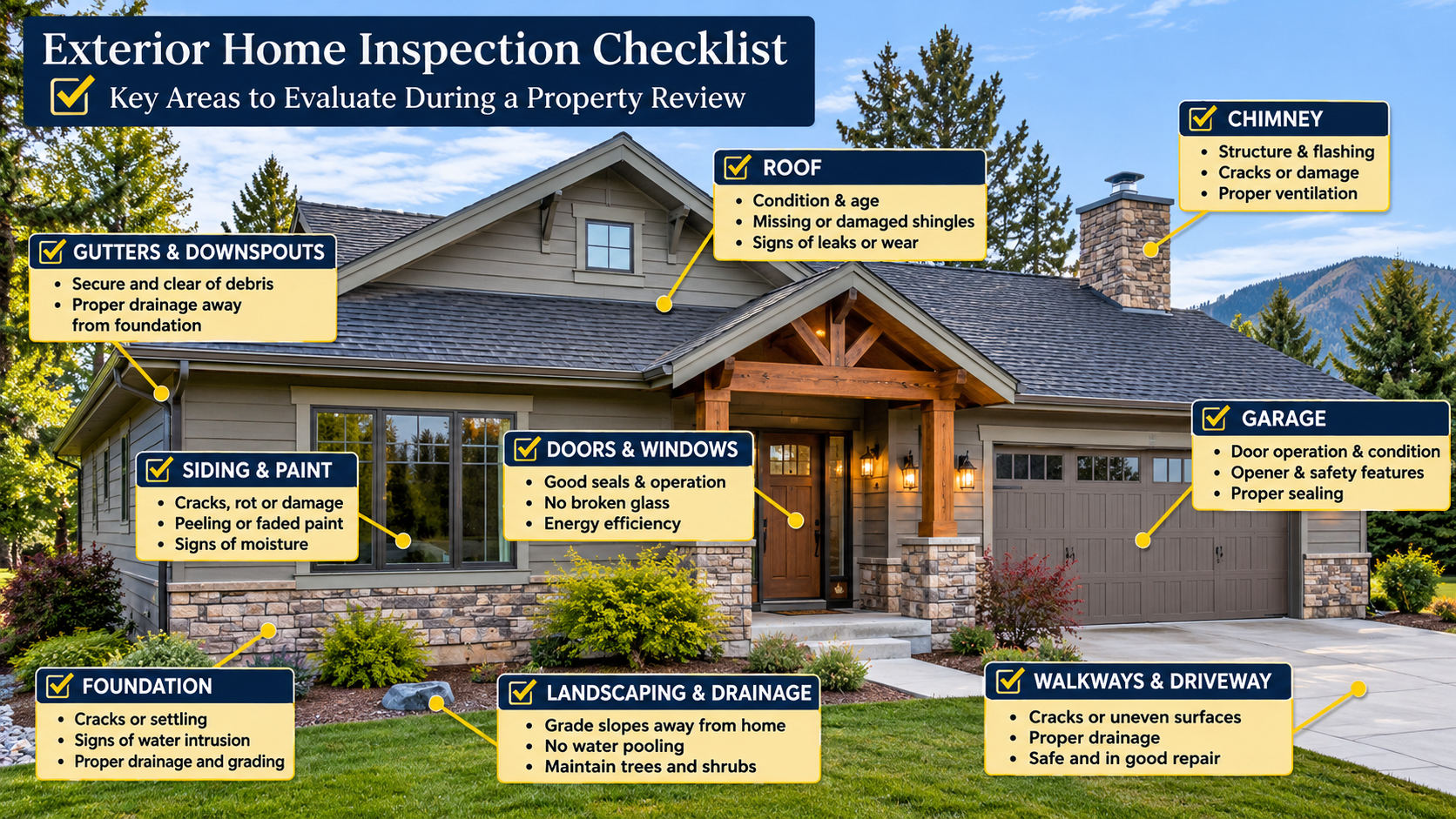
Our suggestion: Use a written checklist for every property. It helps keep an appealing view or attractive kitchen from overshadowing practical concerns.
8. Coordinate Your California Sale and Idaho Purchase
The sequence of your transactions deserves attention early in the process.
Work through these questions with your lender and real estate professionals:
- Do you need the California sale proceeds to buy?
- Can you qualify before your current home sells?
- Will your purchase need to be contingent on that sale?
- Could you comfortably carry overlapping housing costs?
- Would temporary housing give you more flexibility?
- What will happen if either closing is delayed?
Also distinguish closing from possession. Make sure you understand when you must leave one property and when you may move into the other.
Our suggestion: Create a backup plan for lodging, storage, pets, and essential belongings before scheduling movers.
9. Consider Renting Before Buying
If you are uncertain about your preferred location or daily routine, consider whether a temporary rental would help you make a better-informed purchase.
Weigh that option against its costs and inconvenience:
- Rent and deposits.
- Storage expenses.
- The possibility of moving twice.
- Lease terms and pet policies.
- The time you would gain to explore and compare properties.
Renting first is not the right answer for everyone, but it is worth discussing when uncertainty is high.
Our suggestion: Choose the sequence that supports a sound decision rather than feeling pressured to buy immediately because you have sold.
10. Prepare for the Administrative Side of Moving
Keep a separate checklist for the tasks that are easy to overlook during a home purchase.
Include:
- Driver’s licenses and vehicle registration.
- Insurance policies and address changes.
- Healthcare providers and prescription transfers.
- Utilities and internet installation.
- Banking and mailing addresses.
- School enrollment, if applicable.
- Important documents and emergency contacts.
Idaho’s DMV provides information for new residents covering licensing, vehicle titles, plates, and registration. Check its current requirements and deadlines as you prepare to move.[dmv.idaho]
Our suggestion: Keep identification, medications, financial records, chargers, and transaction paperwork with you rather than packed in the moving truck.
Your California-to-Idaho Moving Checklist
Before You Choose a Location
- Define your lifestyle priorities.
- Establish a realistic housing and transition budget.
- Explore several locations that meet your needs.
- Test everyday routes and services.
- Research local seasonal conditions.
- Speak with your lender and tax professional.
Before You Buy
- Confirm financing and the sequence of your transactions.
- Obtain property-specific insurance quotes.
- Review disclosures and applicable HOA documents.
- Verify utilities, internet, and essential services.
- Complete appropriate inspections and due diligence.
- Ask the county assessor about property taxes and exemptions.
Before Moving Day
- Confirm closing and possession dates.
- Arrange movers, utilities, and insurance.
- Prepare a backup lodging and storage plan.
- Review new-resident requirements.
- Keep essential documents and belongings accessible.
- Maintain a reserve for unexpected costs.
[IMAGE PLACEHOLDER: CHUCK AND RENEE LAMB]
Insert a welcoming photograph of the two of you.
Suggested caption: “Chuck and Renee Lamb bring more than five decades of combined real estate experience and a personal understanding of the California-to-Idaho move.”
Considering a Move From California to Idaho?
We understand that relocating is more than a real estate transaction. It is a decision about your finances, routines, relationships, and future.
Having lived in Southern California and Danville before moving to Idaho, we appreciate the questions that come with making this change.
Our goal is to help you ask the right questions, understand your options, and approach your move with a clear plan.
Visit RealEstateInStarIdaho.com to learn more about Chuck and Renee Lamb and get in touch about your relocation plans.
This article provides general educational information, not tax, legal, lending, or insurance advice. Requirements and individual circumstances vary. Confirm current information with the appropriate agencies and qualified professionals.
Thinking About Moving From California to Idaho?
We’ve made that move ourselves. Explore our practical guide to comparing costs, evaluating locations, coordinating your sale and purchase, and preparing for your next chapter.
Button text: “Read Our California-to-Idaho Moving Guide”